
 IT ONLY TAKES A MINUTE!

Franking Machine Sizes: Which Volume Do You Need?
Franking machines come in three rough sizes: low, mid and high volume. Pick the wrong one and you'll either pay every month for speed you never use, or watch someone feed envelopes in one at a time for half an hour. The trick is matching the machine to what you actually post, not what a salesperson thinks you might post one day.
Start by counting your post
Before you look at a single machine, spend a fortnight counting. Note down each day:
- How many standard letters you send.
- How many large letters.
- How many parcels, and roughly how heavy they are.
- Whether it all goes at once or in dribs and drabs.
That gives you an average daily volume and a sense of your mix. Both matter.
Low volume machines
Typical daily volume: up to about 50 to 100 items.
Low volume machines are compact desktop units, built for small offices and home businesses. They're fed by hand, one item at a time, and usually have a small built in scale.
Examples (specs from manufacturer and dealer sheets, checked October 2026):
- Quadient iX-1: about 18 letters a minute.
- FP PostBase Vision 3S: about 30 letters a minute, 2kg scale, 5mm thickness, suggested for up to 200 items a day.
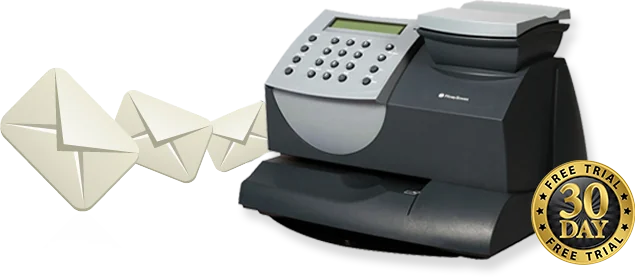
- Pitney Bowes DM50: a long standing compact option. See our DM50 review.
Good for: sole traders, small practices, lettings agents, small charities.
Mid volume machines
Typical daily volume: about 100 to 500 items.
Mid volume machines are faster, often semi automatic, with bigger scales and better software for tracking spend by department. Some add differential weighing, which works out each item's weight as you lift it off a mixed stack.
Examples:
- Quadient iX-3: about 45 letters a minute, weighing platforms up to 35kg available.
- Pitney Bowes SendPro C: up to 50 letters a minute, 5kg scale as standard.
- FP PostBase Vision 5S: about 50 letters a minute, 5kg scale, suggested for up to 300 a day.
- FP PostBase Vision 7A: about 75 letters a minute, 7kg scale, differential weighing, up to 500 a day.
- Quadient iX-5: 75 letters a minute hand fed, about 110 with auto feed.
Good for: busy offices, schools, growing online sellers.
High volume machines
Typical daily volume: 500 items and up.
High volume machines are built for mailrooms. They have automatic feeders, dynamic weighing that measures items on the move, sealing, stackers and larger weighing platforms.
Examples:
- FP PostBase Vision 9A: up to 120 letters a minute, 10kg scale, dynamic weighing, stacker included, suggested for over 800 a day.
- Quadient iX-7: up to 175 letters a minute with its mixed mail feeder, dynamic weighing at about 110 a minute, platforms up to 35kg. See our PostBase Qi6 review for an older FP mailroom option.
Good for: large offices, councils, colleges, central mailrooms.
Speed and scale limits
Two specs trip people up more than any others.
Speed. The letters per minute figure is a best case, usually for identical standard letters fed automatically. Real world speed with mixed mail is lower. Don't buy a faster machine just for the number; buy it because you have the batch sizes to use it.
Scale. If you post parcels, check the built in scale limit. A 2kg scale means heavier items need weighing elsewhere. Many mid and high volume machines take optional external platforms. Also check the thickness limit. Large letters can be up to 2.5cm thick, but many small machines only feed items up to 5mm to 10mm, so thicker items need a label.
Mixed mail changes everything
Volume isn't the only thing that decides the size. A business sending 150 identical letters a day can manage with a fairly basic machine, because every item is the same weight and price. A business sending 150 mixed items, some letters, some large letters, some small packets, will spend far longer weighing and selecting services unless the machine does that work for them. That's what differential weighing is for, and it's why we'd often suggest a mid volume machine with that feature even at fairly modest volumes.
Decision table
| Your situation | Suggested size |
|---|---|
| Under 50 items a day, mostly letters | Low volume |
| 50 to 100 items a day, some large letters | Low or entry mid volume |
| 100 to 300 items a day, mixed mail | Mid volume |
| 300 to 500 items a day, mixed weights | Mid volume with differential weighing |
| Over 500 items a day | High volume |
| Lots of parcels at any volume | Pick a model with a bigger scale or external platform |
Don't forget growth, but don't overdo it
It's sensible to allow for some growth, especially on a multi year lease. But buying a mailroom machine for an office that posts 40 letters a day is a fast way to waste money. If you're genuinely unsure where you'll be in two years, a shorter contract or rental lets you resize later.
If you're still unsure after all this, try our machine finder. It asks four quick questions about your post and suggests a size and three models to get quotes for. It's a useful sense check before you speak to a supplier.
FAQs
What size franking machine does a small business need?
Most small businesses are fine with a low volume machine. See our small business franking machines guide.
Does a bigger machine mean cheaper postage?
No. Royal Mail's franking prices are the same whatever size machine you use.
Can I upgrade mid contract?
Often, if you ask. Many suppliers will roll an upgrade into a new agreement.
Looking for a deal?
Once you know your size, compare a few suppliers on the same spec. Compare franking machines.